

Media kit

March 20, 2026As the GoE initiative moves into its second phase, we are pleased to invite leading experts and opinion leaders in genomics, personalized medicine and public health to join an exclusive online roundtable discussion event. This high-level discussion aims to share the latest progress and emerging results of the Genome of Europe project, while creating a space for experts to reflect on real-world implementation experiences and future opportunities for genomics-driven healthcare in Europe.
Personalised invitations have been sent out by the GoE consortium to EU officials, national politicians and stakeholders, healthcare authorities, leading research experts of the filed and journalists. We hope to encourage our invited participants to take these insights forward within their own networks and communities and communicate GoE latest achievements and future prospects to a wider community.
Date: 15 April 2026 Time: 15:00 CET (duration ~75 minutes)Format: Online roundtable discussion (by prior registration only) Registration: Available upon personal invitation (If you have not received an invitation, but feel that you should be part of this event, please contact GoE consortium via our contact form)
The roundtable will feature an overview of the current state of Genome of Europe project and short expert perspectives on national initiatives and implementation pathways in personalised medicine:
Program
Genome of Europe: a multinational reference and beyond
Prof. Dr. André Uitterlinden (GoE project Lead)
Professor of Complex Genetics, Laboratory of Population Genomics, Department of Internal Medicine, Erasmus MC University Medical Center, Netherlands
André G. Uitterlinden is an emeritus Professor of Complex Genetics and was with > 50 group members head of the Laboratory of Population Genomics and the genomics facility at the Erasmus Medical Centre in Rotterdam. Prof. Uitterlinden has a long standing interest in DNA analysis, both technically as well as applying this to human health related research.
PROPHET- Personalized Prevention Roadmap for the future healthcare.
Prof. Stefania Boccia
Professor of Hygiene, Preventive Medicine and Public Health at Università Cattolica del Sacro Cuore, Italy
Prof. Stefania Boccia is a Full Professor of Hygiene, Preventive Medicine and Public Health and serves as the Director of the Department of Life Sciences and Public Health at the Università Cattolica del Sacro Cuore in Rome. Her academic and scientific work spans epidemiology, personalized medicine, and healthcare policy, with a strong international footprint. She also holds key leadership roles in major European public health initiatives and expert groups, and is recognized among the world’s top 2% scientists in public health
Genomics for Poland (G4PL) – project outline and relation to Genome of Europe
Prof. Luiza Handschuh
Director of Institute of Bioorganic Chemistry Polish Academy of Sciences, Head of Laboratory of Genomics, Poland
Luiza Handschuh is a molecular biologist, specialized in genomics and transcriptomics, particularly interested in human genomics, oncogenomics, and archaeogenomics. Co-organizer of the European Center for Bioinformatics and Genomics (ECBiG) and the Poznan Center for Archaeogenomics (PCA). She is responsible for implementing microarray and next-generation sequencing (NGS) technologies at the Institute of Bioorganic Chemistry Polish Academy of Sciences (IBCH PAS). In the time of COVID-19 pandemic, she was a coordinator of the ‘Viral Support Group’, a group of volunteers from IBCH PAS actively involved in COVID-19 diagnostics and commercialization of the Polish SARS-CoV-2 diagnostic test. Since 2013 she is the head of the Laboratory of Genomics and since December 2023 – director of IBCH PAS. She is a participant in the Genome of Europe and leader of the G4PL – Genomics for Poland project; Polish expert in the EU Cancer Mission; a member of the European Society of Human Genetics, the Human Genome Organization, the Polish Society of Hematology and Transfusion Medicine, and the Polish Biochemical Society.
Beyond One-Size-Fits-All: Implementing Population-Based Personalised Breast Cancer Screening in Estonia
Krista Kruuv-Käo
Healthcare Services Development Manager at the Estonian Health Insurance Fund
Krista Kruuv‑Käo is a former medical doctor with a long‑standing background in personalised medicine and public health. She played a significant role in the early development of the Estonian Biobank and has gained industry experience through her work with Antegenes, where she contributed to the advancement of genetic‑based risk assessment and personalised cancer prevention services. Today, Krista Kruuv‑Käo leads healthcare service development at the Estonian Health Insurance Fund (Tervisekassa), serving as the head of preventive services and playing a central role in the rollout of nationwide cancer screening programs and the integration of genetic data into public health services.
Pharmacogenomics in Netherlands
Prof. Dr. Jesse Swen (PhD, PharmD)
Professor of Clinical Pharmacy & Section Chair of the Laboratory at the Department of Clinical Pharmacy and Toxicology, Leiden University Medical Center, Netherlands
Jesse Swen is a leading pharmacogenomics researcher and full professor of clinical pharmacy, specializing in translational pharmacogenetics at the Leiden University Medical Center (LUMC). His work focuses on improving drug treatment outcomes through the discovery and clinical implementation of pharmacogenetic biomarkers.
Followed by an open discussion session…
Data Privacy Notice of GoE Roundtable discussion event
GoE Roundtable_Data Privacy Notice_20.04.2026Download [...]
Read more...
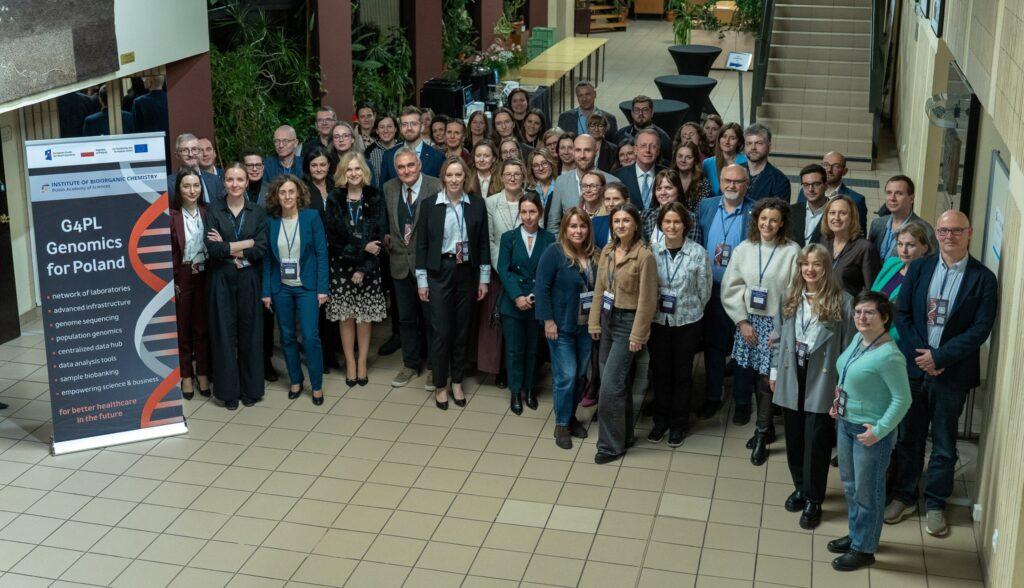
February 16, 2026We are excited to announce that GoE partners from Poland, Institute of Bioorganic Chemistry Polish Academy of Sciences and University of Lodz, have launched their new project co-financed by the European Union, entitled Genomics for Poland (G4PL). The project, constituting the largest strategic genomics research initiative ever implemented in Poland, is carried out by a consortium of 12 research institutions, led by the Institute of Bioorganic Chemistry Polish Academy of Sciences (IBCH PAS), accompanied by the affiliated Poznan Supercomputing and Networking Center (PCSS). The PI of the project is Luiza Handschuh, the director of IBCH PAS.
G4PL aims to establish a nationwide, interoperable infrastructure for genomic research, including a network of laboratories, a central national repository for genomic data, and biobanks. It addresses growing demand for advanced genomic services in academia, industry, and healthcare, contributing to the development of personalized medicine, innovative diagnostics, and targeted therapies.
Within the project, 6,000–7,000 DNA samples will be sequenced, including those from healthy donors across the country as well as patients with rare diseases. A portion of these data will contribute to GoE, integrating Polish resources into the European genomic landscape. Data analysis pipelines, AI-based tools and a dedicated software for prioritizing genetic variants will be developed. The greatest challenge will be applying the power of a quantum computer to processing genomic data.
Kick-off meeting
The G4PL kick-off meeting took place on 22–23 January 2026 in Poznań. During the first day open session, held at IBCH PAS, keynote lectures were delivered by the GoE coordinator, André Uitterlinden who discussed genomics from a European perspective, and Jan Lubiński (Pomeranian Medical University, Szczecin), who presented research on genetic predispositions of the Polish population to cancer.
Both lectures, as well as a presentation of the G4PL project by Luiza Handschuh, are available here: https://www.youtube.com/watch?v=PCMR3r5ePAg
Consortium membersConsortium membersInstitute of Bioorganic Chemistry PAS – leaderInstitute of Human Genetics PASNencki Institute of Experimental Biology PASPoznan University of TechnologyUniversity of WarsawMedical University of BialystokUniversity of LodzUniversity of GdańskJagiellonian UniversityCardinal Stefan Wyszynski National Institute of Cardiology – National Research InstituteMaria Sklodowska-Curie National Research Institute of Oncology – Gliwice BranchŁukasiewicz Research Network – PORT Polish Center for Technology Development (Wrocław)
Project detailsFunding: Project co-financed by the EU under the European Funds for Modern Economy programmeTotal budget: PLN 248,337,770.24EU contribution: PLN 180,481,656.59Timeline: 2026–2029In-kind partners: BCODERS S.A., Analityk Genetyka Unrug Wójtowicz Sp. k. [...]
Read more...

November 3, 2025This month marks the first anniversary of The Genome of Europe, a milestone that reflects a year of groundbreaking collaboration, scientific ambition, and shared vision across borders. Since its launch, the project has united researchers, institutions, and communities in shaping a genomic legacy for future generations.
In this newsletter, we’re honored to share a message from our Project Lead, André Uitterlinden, to commemorate this occasion and reflect on the journey so far and the exciting path ahead. Read about the latest updates of our project.
The newsletter is available here
If you want to receive the next newsletter straight to you mailbox, sign up below! [...]
Read more...
October 30, 2025A short video has been produced about the Genome of Europe project, in collaboration with Illumina, showcasing how Professor André Uitterlinden at the Erasmus Medical Centre in Rotterdam, the Netherlands, and GoE partners are using technology to bring the project forward for better diagnostics, prevention, and the future of genomic medicine.
In this video, André Uitterlinden explains in simple terms the aims and objectives of the project, descrbing how it is laying foundations for genomics-informed healthcare in Europe. [...]
Read more...

October 30, 2025A post-doctoral position in human population genetics is opening in French National Institute for Health Research – INSERM (Brest, France) to work on the Genome of Europe (GoE) project.
Founded in 1964, INSERM is a public scientific and technological institute which operates under the joint authority of the French Ministries of Health and Research. The institute is dedicated to biomedical research and human health, and is involved in the entire range of activities from the laboratory to the patient’s bedside. It also partners with the most prestigious research institutions in the world that are committed to scientific challenges and progress in these fields. Inserm brings together 15,000 researchers, engineers, technicians and administrative staff, all with one shared objective: improve health by advancing knowledge about living organisms and diseases, developing innovative treatment modalities and conducting research on public health.
Dr. Anthony Herzig’s lab at INSERM (GoE WP6 lead) is currently offering a postdoctoral research position to support the Genomics of Europe (GoE) pilot studies. The role is suited for candidates with expertise in Bioinformatics, Population Genetics, or Statistical Genomics.
This opportunity provides a chance to contribute to cutting-edge research within the GoE use cases. The postdoc will be working on a series of use-cases that will demonstrate the interest of the project, including describing the landscape of genetic ancestry across the dataset, mapping differences in allele-frequencies between sub-populations (with a focus of clinically relevant and pharmacogenetic variants), creating ancestry-specific imputation panels, calibrated polygenic-score distributions, and incorporating variant calls from a subset of approximately 5000-10000 individuals with long-read whole-genome sequencing data.
The post-doc will be responsible for developing workflows and, where possible, new methods in order to complete pilot studies for the use-cases of GoE. This is an exciting opportunity to work with leading experts across the whole of Europe in statistical and medical genetics.
Duration of the contract: 24 months, starting in early 2026
Interested applicants can find more details and apply via the Nature Careers portal here or contact Dr. Herzig directly at anthony.herzig@inserm.fr [...]
Read more...
July 23, 2025The July 2025 edition of the Genome of Europe external newsletter is now available!This issue provides a snapshot of progress across the Genome of Europe initiative, latest meetings and news items, deliverables and collaborations.
For detailed view please see HERE
And don’t forget to sign up! [...]
Read more...

July 18, 2025Genome of Europe has published a White paper for representatives from ministries of health and science, health authorities and professionals.
As part of a deliverable, GoE has compiled a White paper which emphasizes the urgent need for increased investment in disease prevention to extend healthy lifespans and reduce healthcare costs in Europe. It highlights the potential of the “1+ Million Genomes” initiative and projects stemming from it to revolutionize disease prevention and personalised treatment through large-scale genomic data infrastructure and research. The compilation of the White paper is the first step in the process of approaching decision- and policymakers and healthcare professionals. This will be distributed on face-to-face meetings, round-table discussions and via direct contact to relevant stakeholders.
With the dissemination of this White paper we expect to increase awareness and prioritization of genomic research and use of genetics in healthcare in Europe. We expect politicians and decision makers to become more aware of the urgent need for investment in disease prevention and the potential benefits of genomic data initiatives, like Genome of Europe. We expect the White paper to contribute to drive the creation of supportive policies and the allocation of more funding towards genomic research, ultimately aiming to improve public health and reduce healthcare costs across Europe.
GoE_White paper_on GoE doctemplateDownload [...]
Read more...

June 25, 2025The Genome of Europe (GoE) has launched a public awareness survey across five European countries (Estonia, France, Greece, Portugal, and Slovenia) to assess citizens’ understanding and attitudes towards genetics and genomics-based personalized medicine. The survey is part of a wider scientific and societal effort to ensure that all Europeans can benefit from the promises of modern genomic medicine.
Why it is needed?
Genetics plays a key role not only in the development of diseases but also in how individuals respond to medical treatments. While the human genome is 99% identical across individuals, each has unique genetic variations that influence their health and medical outcomes. Recent advances in science and medicine have made it possible to use this genetic information to predict, prevent, diagnose, and treat diseases more precisely—a concept known as personalized medicine.
The current survey is part of the Genome of Europe initiative, a pan-European research project uniting 27 countries to create a comprehensive reference database of genetic data from people of diverse ancestries living across Europe. This reference data is crucial for developing fair and effective personalized medicine accessible to all European citizens, regardless of their background.
In addition to building genomic reference cohorts, the project seeks to raise public awareness and engage key stakeholders on the benefits and implications of genomics-based healthcare through various communication activities. This survey plays a key role in shaping those efforts.
” There is an increasing interest in genetics and personalized medicine across Europe, driven by advancements in genomic research and technology. We are polling people in 5 member countries to address the relevant communication more precisely. If people do not understand what personalized medicine is and how it would improve healthcare in the coming years, they are not going to use it“, said Prof. Andres Metspalu, Professor of Genomics and Biobanking at the University of Tartu.
The survey’s primary objective is to evaluate public knowledge of genetics and attitudes toward using genomics in personalized healthcare across different European regions. The results will help identify knowledge gaps, misunderstandings, or ethical concerns and guide future communication and engagement strategies. The survey is conducted in two phases: the first in the early stages of the project (2025), and the second just before its conclusion in 2028.
Share our news with your network!
Eurekalert news item
LinkedIN post
Facebook post [...]
Read more...
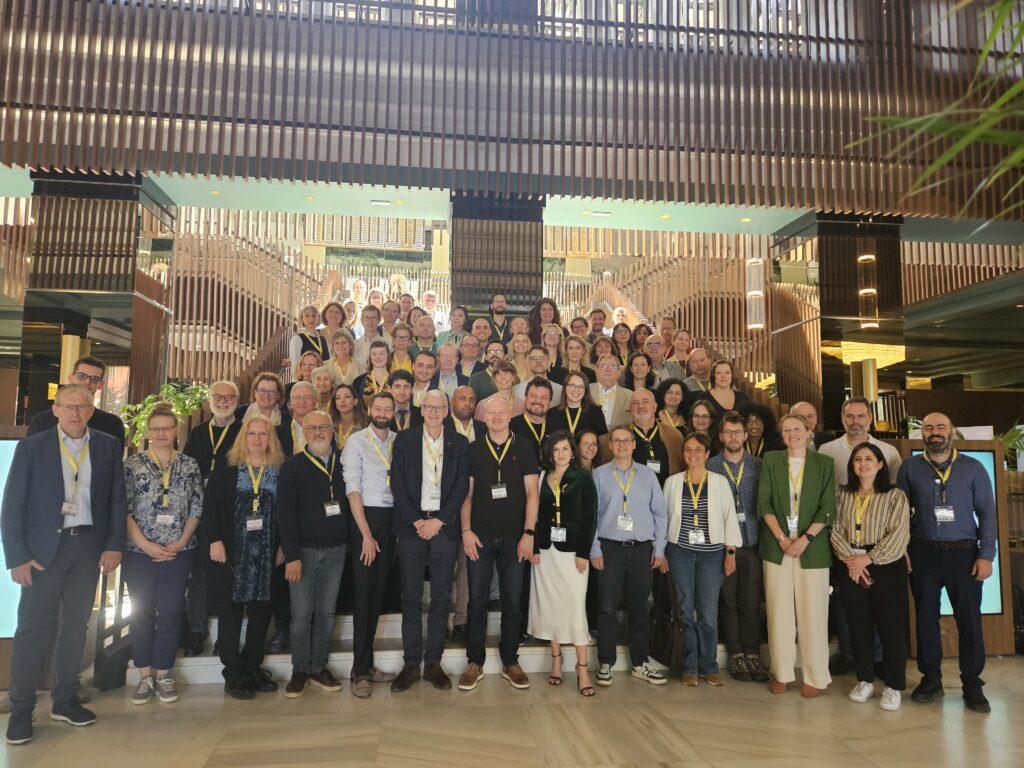
June 25, 202523. May, 2025 – at the Melia Hotel, Milan, Italy — Just ahead of the annual European Human Genetics Society (ESHG) meeting, the Genome of Europe (GoE) project consortium gathered in Milan for a pivotal in-person meeting focused on shaping the future of genomic research.
The meeting brought together representatives from participating countries to align on the project’s core mission: to build a comprehensive, diverse, and ethically grounded genomic reference for Europe. The event brought together 81 people in person and 47 online – project partners, candidate countries, funding agency representatives, advisory board members and industry representatives. Work package leads gave overviews of the latest developments and open discussions were held on topics raised during brainstorming sessions.
As a general summary, the following themes came to the forefront of discussions:
The purpose of the GoE project: mission statement, goals, message to the world and visibility
Connection and alignment with GDI: metadata and future proofing
Approach towards diversity and representation, sample numbers, country of origin
The role of ELSI expertise in GoE countries
Sequencing technology approaches for GoE samples
Internal communication: communication channels, materials, calendar
Much of the discussion during the consortium meeting reflected on the purpose of the project and how we can better share its mission with the world. The meeting in Milan reinforced a powerful, shared motivation among all participating countries:🔹 To represent the rich genetic diversity of modern European populations🔹 To demand and deliver the highest standards of scientific integrity🔹 To collectively build a reference map that will shape the future of precision medicine and public health in Europe. [...]
Read more...
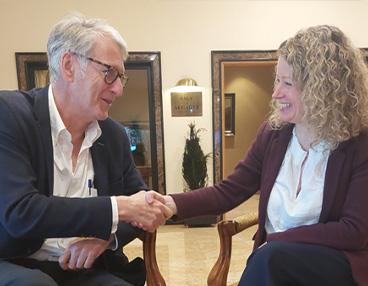
March 3, 2025The European Genomic Data Infrastructure (GDI) project and Genome of Europe (GoE) have formally announced a strategic collaboration by signing a Memorandum of Understanding. This collaboration will stimulate knowledge exchange between the two projects to advance population genomics research in Europe and enable data access and analysis across participating countries.
Both EU projects are co-funded by the Digital Europe Programme to realise the 1+Million Genomes (1+MG) Initiative’s ambition of accelerating the deployment of genomic medicine at the European level and fostering the development of personalised prevention, diagnosis and treatment. The projects are built on the 1+MG Framework, which organises the recommendations, guidelines and best practices of European Union experts to realise the 1+MG initiative’s ambition.
The GoE project aims to establish a unique pan-European reference database comprising of a minimum of 100,000 genomes representative of European citizens and demonstrate long-term benefits to the use of genomic data in research, healthcare, and prevention.
The GDI project is establishing a federated, sustainable and secure infrastructure across participating countries to access data and its associated metadata. The GDI project demonstrates the benefits of the European Genomic Data Infrastructure to its stakeholders via use cases, including cancer, infectious diseases and population genomics.
The two projects will work collaboratively to make GoE data available via the GDI infrastructure. This involves addressing regulatory challenges of providing access across national borders to genome, health and clinical record data.
GDI and GoE look forward to working together to make European population genomic data accessible across borders. [...]
Read more...

March 2, 2025In March 2025 Genome of Europe project launched its first newsletter. The quarterly newsletter will conclude latest developments and achievements in the project, introduce people and institutions involved, pinpoint events worthy to attend and much more.
The newsletter is outward looking and directed to all interested in the developments of the project and the field!
If you wish to get this newsletter directly into your mailbox in the future, please sign up below in the footer of the page!
GoE_newletter_March25Download [...]
Read more...

November 14, 202427 countries join forces to establish a unique pan-European reference database comprising of a minimum of 100,000 genomes representative of European citizens.
The most extensive EU-funded programme on population genomics to date, “Genome of Europe” (GoE), was officially launched by bringing more than 100 researchers and experts from 74 institutions across 34 countries together in Rotterdam, the Netherlands on 30—31 October. During the next 42 months, this groundbreaking initiative, backed by €45 million in funding (with 20 million coming from the EU) will establish a unique pan-European reference database. This will consist of newly generated whole genome sequences from 40 subpopulations across the participating countries to generate the reference genome – all for the benefit of personalised health care.
Prof. André Uitterlinden, Coordinator of the Genome of Europe project from Erasmus MC, University Medical Center, stated: “The Genome of Europe will play a crucial role in genetic discoveries in health care and prevention, support national genome programs, and facilitate the integration of genomics into the European Health Data Space. The choice of the location of the kick-off meeting (a large ocean liner SS Rotterdam) is symbolic—much like a ship setting sail, embarking on a journey to a new world, the Genome of Europe programme begins its ambitious journey towards laying the foundation for a future of genomics-assisted healthcare in Europe and beyond. National genome programs exist elsewhere, but this is the first time 27 countries come together in such a single project. This historic and monumental enterprise aims to unite European genomics initiatives to help make personalised medicine a reality for all Europeans. On behalf of the whole coordination team, I can only say we are very grateful for the very enthusiastic support of so many countries to make this project happen.”
Personalised medicine is increasingly a global focus area in health care and prevention, to optimise early detection, diagnosis, treatment and prevention of both common and rare diseases in all major disease and public health areas. The genetic information of a person’s DNA or genome is the foundation stone of personalised medicine.
Database of representative reference genomes
An essential first step will be the generation of a database of representative reference genomes to characterise “normal” genetic diversity across population subgroups in Europe. While some European genetic data sources exist, the Genome of Europe will collect whole-genome sequencing (WGS) from an unprecedented number of subpopulations and minorities across Europe. This will be critical for many subsequent personalised medicine applications using genetic information, both in clinical genetics and oncology where WGS is already taking place, as well as in treatment (e.g., pharmacogenomics) and prevention programmes.
With a strong focus on public engagement, transparency, ethical and legal frameworks, and sustainability, GoE will lay the groundwork for responsible genomic advancements across Europe, promoting the EU’s global leadership in genomic research and personalised health care.
“Much and many of our characteristics as human beings are encoded in our DNA, including our risk for diseases or how we respond to treatment. And we carry this information from birth till death, opening up the possibilities of comprehensive risk prediction with single and affordable tests, e.g., in prevention programmes. As a result, DNA information is used widely in clinical and research applications, such as understanding disease biology, targeting prevention or genetics-assisted diagnostics. Interpretation of such findings depends critically on the quality of your reference while implementation in national settings requires calibration to the diversity of local communities. And historically Europe has seen enormous dynamics of genetic diversity through migration and colonialism,” explains André Uitterlinden, Coordinator of the Genome of Europe project.
Boost for personalised medicine and prevention
The 1+MG initiative has brought together scientific and governmental experts from around Europe to discuss all aspects of this development while aiming to create 500,000 reference genomes to more fully capture that genetic diversity. “Genome of Europe will now create this first data collection of 100,000 genomes, which will boost all the areas in personalised medicine and prevention,” said Uitterlinden.
Overall, the project actively engages with the broader European landscape, aligning with relevant initiatives, programmes, and recovery plans to create a strong foundation for the GoE project. In addition, GoE is planning to actively engage with other Genome programmes globally such as in the USA, Canada, Australia, and the UK, as well as develope programmes in Africa, the Americas, Asia, and the Middle East.
About the Genome of Europe (GoE)
The Genome of Europe aims to establish a unique pan-European reference database of at least 100,000 genomes—a milestone supporting the larger 1+ Million Genomes initiative. The reference database will represent Europe’s diverse populations, integrating existing genomic datasets and new genomic data through de novo sequencing of distinct national populations. The project encompasses 49 partners across 27 European countries (26 EU + 1 non-EU) and is backed with €45M in funding, with €20M coming from the European Commission under the Digital Europe Programme.
Key goals of the initiative include:
Creating a pan-European community of practice: Establishing a collaborative community to support the reference genome project.
Evaluating the long-term potential of genome sequencing in research and health care in Europe and beyond, including different sequencing technologies, also long-read sequencing, helping to uncover previously inaccessible “dark regions” of the genome.
Focusing on ethics, data security, and legal compliance: The project will be guided by ethical, legal, and societal considerations while upholding stringent data security standards building (inter)national guidelines for the responsible use of WGS that leads to better health care for EU citizens.
Embedding GoE data within Europe’s genomic data infrastructure: Integrating GoE data into the previously funded Digital Europe Programme’s Genomic Data Infrastructure (GDI) project, ensuring interoperability across initiatives.
Assessing GoE’s impact and usability: Through case studies, evaluating the project’s contributions to understanding genetic diversity, enabling multi-ancestry imputation, and enhancing genetic risk profiling.
The project is cofunded by the European Commission under grant agreement no. 101168231
About the Erasmus University Medical Center
Erasmus MC is the largest University Medical Center in the Netherlands. Our primary goal is a healthy population. Over 18,000 employees devote themselves every day to providing outstanding care, facilitating world-class education and conducting pioneering research. These professionals are instrumental in developing expertise on health and illness. They link the latest scientific insights to practical treatments and prevention measures to provide maximum benefit to patients and to enable healthy people to stay healthy longer. Being visibly better and leading the way in the areas of complex, innovative and acute care by collaborating with others: these are key ambitions at Erasmus MC. [...]
Read more...